
- All Products
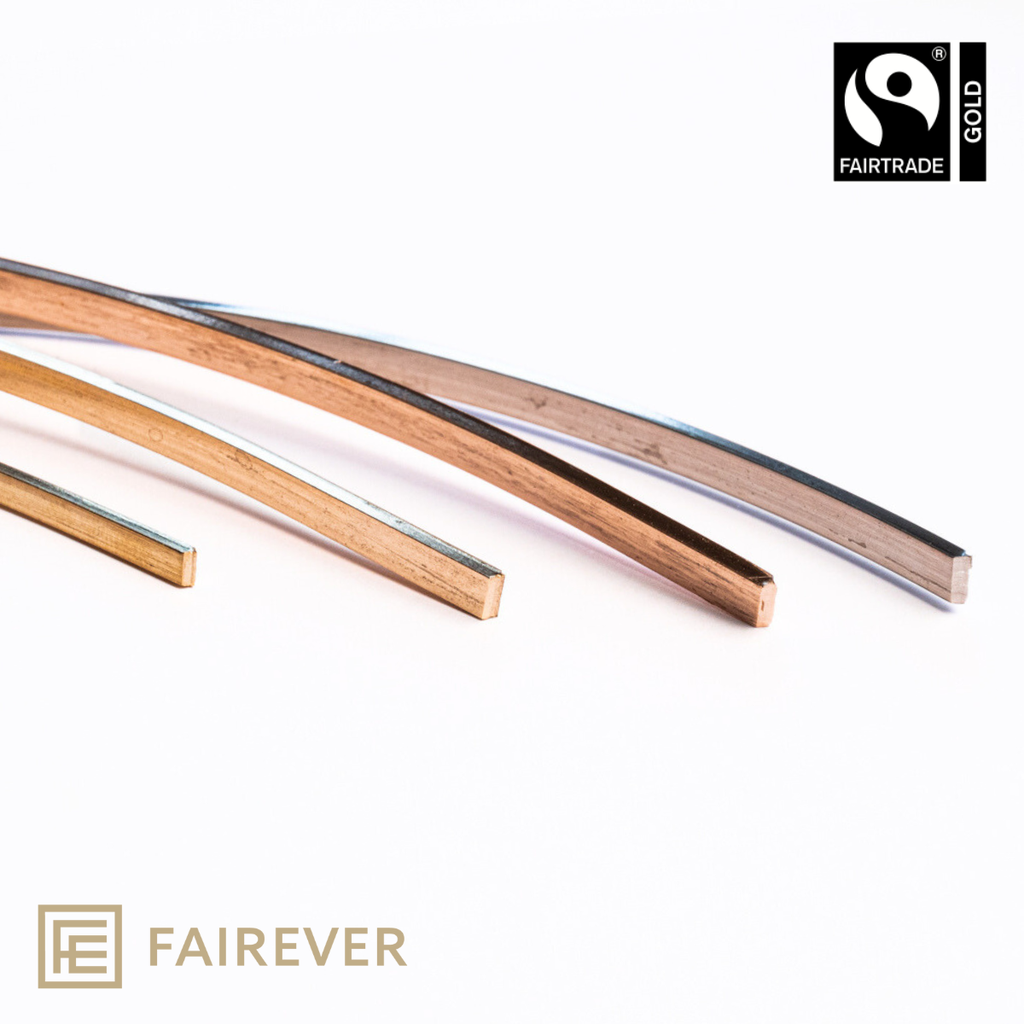
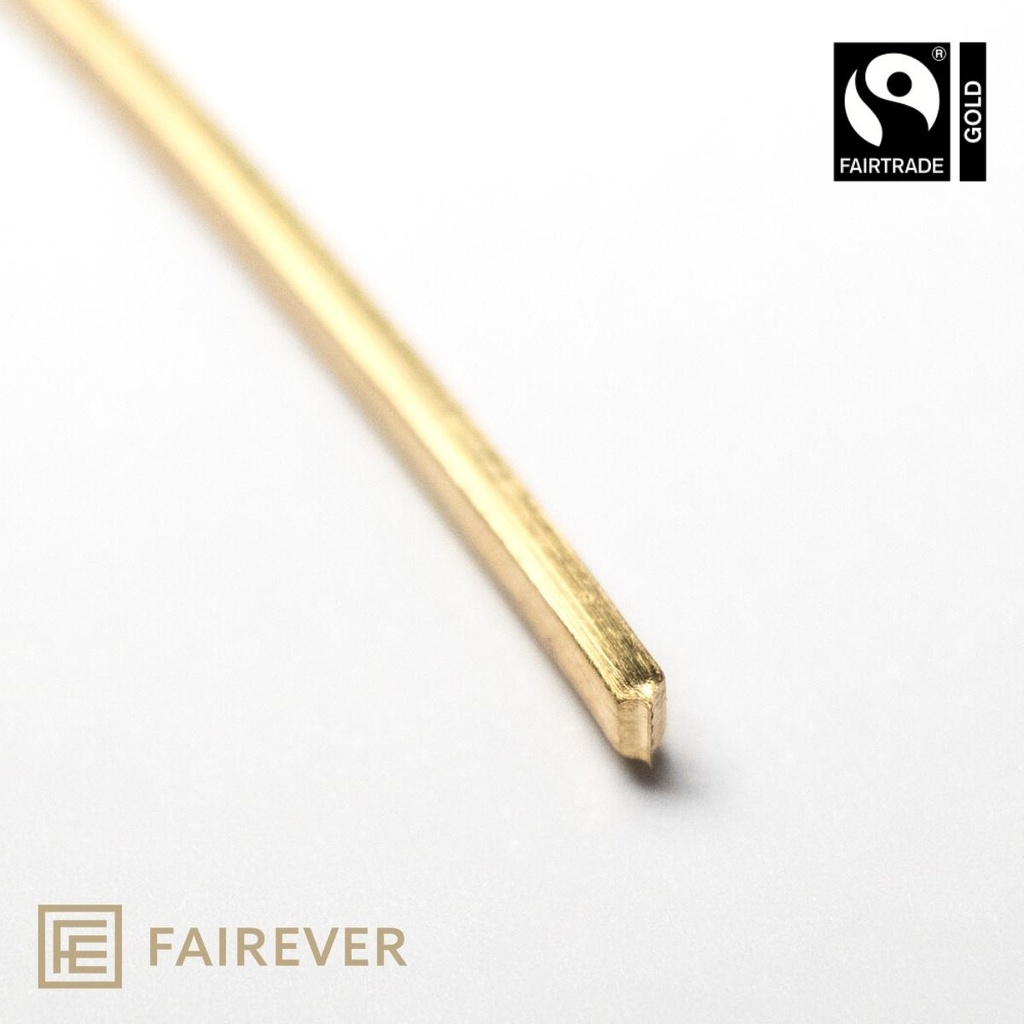
- Gold Wire - 585 ‰ (14 kt) Fairtrade Gold (rose, yellow)
Gold Wire - 585 ‰ (14 kt) Fairtrade Gold (rose, yellow)
https://www.fairever.gold/shop/fairtrade-gold-wire-752 https://www.fairever.gold/web/image/product.template/752/image_1920?unique=d877c1aGold wire in custom measurements.
| — Certification: The fine gold contained is certified to Fairtrade Standards. |
MADE WITH 14K FAIRTRADE GOLD
HERGESTELLT MIT 585 ‰ FAIRTRADE GOLD
Gold Wire - 585 ‰ (14 kt) Fairtrade Gold
Our gold wire is made with 585 ‰ fine gold certified to Fairtrade Standards.
Gold wire can easily be used to create individual pieces of jewelry, such as rings, earrings, bracelets, or chains. With a gold wire made with Fairtrade gold custom-made in the shape, alloy, and dimensions you need, you can save valuable time when creating your jewelry without compromising on ethical sourcing.
We also offer gold sheets made with Fairtrade gold for any additional needs in order to manufacture your individual jewelry pieces.
Golddraht - 585 ‰ (14 kt) Fairtrade Gold
Unser Golddraht hat einen Feingehalt von 585 ‰. Das enthaltene Feingold ist nach Fairtrade-Standards zertifiziert.
Mit Golddraht lassen sich individuelle Schmuckstücke fertigen – Ringe, Ohrringe, Armbänder oder Ketten. Wenn ihr den Golddraht aus Fairtrade Gold in genau der Form, Legierung und Abmessung bekommt, die ihr braucht, spart ihr bei der Herstellung wertvolle Zeit – ohne Kompromisse bei der Herkunft eures Goldes.
Für alles Weitere, was ihr für eure Schmuckstücke braucht, bieten wir auch Goldblech aus Fairtrade Gold an.
Fairtrade Gold
Fairtrade Gold comes from certified artisanal and small-scale mining and is traceable back to the mine. The mining organization receives at least 95 % of the London gold price plus a premium of 2,000 US dollars per kilogram – and decides for itself what happens with it on the ground.
The standard prohibits child labor and regulates occupational safety as well as the handling of mercury and cyanide. All of this is verified by an independent certification body.
Blog: The Fairtrade system explained
Fairtrade Gold
Fairtrade Gold stammt aus zertifiziertem Kleinbergbau und ist bis zur Mine rückverfolgbar. Die Kleinbergbau-Organisation erhält mindestens 95 % des Londoner Goldpreises plus 2.000 US-Dollar Prämie je Kilogramm – und entscheidet selbst, was damit vor Ort passiert.
Der Standard verbietet Kinderarbeit und regelt Arbeitssicherheit sowie den Umgang mit Quecksilber und Zyanid. Geprüft wird das von einer unabhängigen Zertifizierungsstelle.
Blog: Das Fairtrade-System erklärt
14kt Alloys
14kt gold alloy made with 585 ‰ Fairtrade fine gold is available in several colors. Its durability and affordability make it a great choice for everyday wear.
14kt Red Gold (on demand)
585 Au, 40 Ag, 374 Cu
14kt Rose Gold
585 Au, 100 Ag, 309 Cu
14kt Rich Yellow Gold
585 Au, 130 Ag, 255 Cu
14kt White Gold
585 Au, 160 Ag, 150 Pd, 79 Cu
14kt Goldlegierungen
Die 14 kt Goldlegierung mit 585 ‰ Fairtrade-Feingold sind in verschiedenen Farben erhältlich. Der geringere Goldanteil und die Härte machen die Legierung zu einer guten Wahl für Schmuckstücke, die den Alltag verschönern.
14kt Rotgold (auf Anfrage)
585 Au, 40 Ag, 374 Cu
14kt Roségold
585 Au, 100 Ag, 309 Cu
14kt Sattgelbgold
585 Au, 130 Ag, 255 Cu
14kt Weißgold
585 Au, 160 Ag, 150 Pd, 79 Cu
Wire Shapes
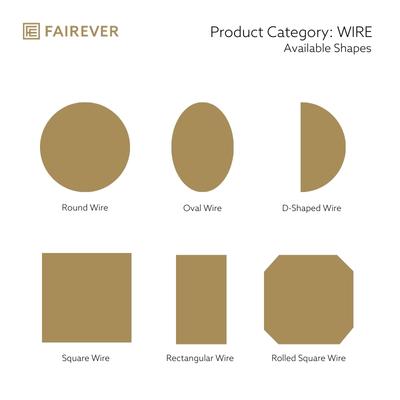
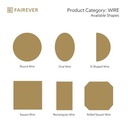
Our Gold Wires can be ordered in 6 different shapes.
There are numerous combinations of custom measurements in all the different shapes available.
Drahtformen
Unsere Golddrähte sind in 6 verschiedenen Formen erhältlich.
Durch die vielen verschiedenen Maße, in denen wir herstellen können, ergibt sich eine Vielzahl an Variationen.

Square Wire
Square wire is used to create a variety of jewelry designs.

Rolled Square Wire
Rolled square wire is most commonly used to create any shape needed.

Rectangular Wire
Rectangular wire is often used for heavier ring designs.

Round Wire
Round wire can be used for many jewelry designs, e.g., twisted rings.
Oval Wire
Oval wire can be used to create very comfortable ring designs or bangles.

D-Shape Wire
The D-shape wire is perfect for creating classical ring designs or bangles.
Most frequently asked questions about Fairtrade Gold Wire
Three components. Two of them go to the mine.
1. The gold price
The spot price is the current value of gold traded on the global market, moved by supply and demand, economic data, geopolitical events and investor sentiment. It fluctuates continuously and is the benchmark every gold product is priced from.
For Fairtrade gold there's a floor underneath it: whatever the market does, the mining organization is guaranteed at least 95% of the LBMA gold fixing for the pure metal content. We currently pay 99 to 100%.
2. The Fairtrade Premium
$2,000 per kilogram — $2 per gram — paid on top of the metal value, directly to the certified mining organization.
How it's spent is not our decision. An elected premium committee at the mine decides, and its composition has to reflect the gender distribution of the workforce (Fairtrade Standard 4.1.1). The money is earmarked for community projects, environmental measures and developing the mining organization itself (4.5.3). Documented examples from certified mining organizations range from scholarships and childcare to protective equipment, safer processing and reforestation.
3. Our costs
Logistics, production, distribution and marketing — plus what it costs to trade certified gold specifically: audits, separate administration, and above all segregation. Fairtrade gold is refined in its own batch, never mixed with other material, and moves in far smaller quantities than the market standard. Segregated refining, small deliveries and low volumes all cost more per gram than bulk gold. That's a physical cost, not a markup.
So of the three components, two are paid to the mining organization and one covers what it costs us to keep the gold traceable and separate.
Yes, anyone can purchase gold wire made with Fairtrade gold.
In addition, we recommend to register online for the Goldsmith registration scheme - it is free and easy. As a registered goldsmith you can better promote your offer of products made with Fairtrade gold and use promotional materials provided by Fairtrade.
Find out more about the Goldsmiths Registration by Fairtrade
The delivery note mentions the certification for your product made with Fairtrade gold. In addition, a separate label on our product packaging confirms the certification. As a Fairtrade licensee, you could even create your own certificates for your jewelry pieces made with Fairtrade gold.
Sourcing responsibly usually comes with a lot of questions.
Check out our FAQ section to find more information about the most commonly discussed topics.
Drei Bestandteile. Zwei davon gehen an die Mine.
1. Der Goldpreis
Der Spotpreis ist der aktuelle Wert von Gold im weltweiten Handel. Er bewegt sich mit Angebot und Nachfrage, Konjunkturdaten, geopolitischen Ereignissen und der Stimmung der Anleger:innen, schwankt laufend und ist die Bezugsgröße, von der aus jedes Goldprodukt bepreist wird.
Bei Fairtrade Gold liegt darunter ein Boden: Was der Markt auch macht – der Bergbauorganisation sind mindestens 95 % des LBMA-Goldfixings für den reinen Metallgehalt garantiert. Wir zahlen aktuell 99 - 100 %.
2. Die Fairtrade-Prämie
2.000 $ je Kilogramm – das sind 2 $ pro Gramm – zusätzlich zum Metallwert, direkt an die zertifizierte Bergbauorganisation.
Über die Verwendung entscheiden nicht wir. Das übernimmt ein gewähltes Prämienkomitee an der Mine, dessen Zusammensetzung die Geschlechterverteilung des Betriebs abbilden muss (Fairtrade-Standard 4.1.1). Die Mittel sind zweckgebunden für Gemeindeprojekte, Umweltmaßnahmen und die Entwicklung der Bergbauorganisation selbst (4.5.3). Dokumentierte Beispiele aus zertifizierten Bergbauorganisationen reichen von Stipendien und Kinderbetreuung über Schutzausrüstung und sicherere Aufbereitung bis zur Aufforstung.
3. Unsere Kosten
Logistik, Produktion, Vertrieb und Marketing – dazu das, was der Handel mit zertifiziertem Gold zusätzlich kostet: Audits, getrennte Verwaltung und vor allem die Segregation. Fairtrade Gold wird in einer eigenen Charge geschieden, nie mit anderem Material vermischt, und bewegt sich in deutlich kleineren Mengen als marktüblich. Segregierte Scheidung, kleine Lieferungen und geringe Volumina kosten pro Gramm mehr als Massengold. Das ist ein realer Kostenfaktor, kein Aufschlag.
Von den drei Bestandteilen gehen also zwei an die Bergbauorganisation, einer deckt das, was es uns kostet, das Gold rückverfolgbar und getrennt zu halten.
Ja, jeder kann Produkte, die Fairtrade Gold enthalten, kaufen.
Zusätzlich empfehlen wir eine Registrierung im Goldschmiede Portal von Fairtrade. Das ist kostenlos und erlaubt dir dein Angebot noch besser zu bewerben und Werbematerial zu benutzen, welches Fairtrade dir zur Verfügung stellt.
Mehr über die Goldschmiede-Registrierung von Fairtrade
Die Zertifizierung aller Produkte wird auf dem Lieferschein angegeben. Darüber hinaus bestätigt ein separates Label die Zertifizierung auf jedem Produkt. Als Fairtrade Lizenznehmer kannst du auch selbst für deine fertiggestellten Schmuckstücke Zertifikate ausstellen.
Eine verantwortungsbewusste Beschaffung wirft in der Regel eine Menge Fragen auf.
In unserem FAQ-Bereich findest du weitere Informationen zu den am häufigsten aufkommenden Themen.
Alloy Instructions
Gold Wire can be made of various gold alloys most commonly used in jewelry making.
We offer a step-by-step guide for goldsmiths and manufacturers on how to work best with our selection of alloys. Please note that only the fine gold contained in our alloys is certified by Fairtrade Standards.
The silver in all our alloys is Fairever ASM Silver. Copper, zinc and palladium are sourced from conventional distributors and we don't have futher information about their origin.
Our following data sheets were created alongside long-term partners to provide accurate information and content; however, we cannot be held liable for any incomplete or incorrect instructions provided below.
Legierungen
Golddraht kann aus verschiedenen Goldlegierungen hergestellt werden, die üblicherweise in der Schmuckherstellung verwendet werden.
Wir bieten eine Schritt-für-Schritt-Anleitung für Goldschmied:innen und Hersteller, wie sie am besten mit unserer Auswahl an Legierungen arbeiten können. Bitte beachten, dass nur das in unseren Legierungen enthaltene Feingold nach Fairtrade-Standards zertifiziert ist.
Das Silber in allen unseren Legierungen ist Fairever ASM Silber. Kupfer, Zink und Palladium beziehen wir von Großhändlern und haben aktuell keine näheren Angaben zur Herkunft.
Unsere Datenblätter wurden in Zusammenarbeit mit langjährigen Partner:innen erstellt, um genaue Informationen und Inhalte bereitzustellen; wir können jedoch keine Haftung für unvollständige oder fehlerhafte Angaben in den nachstehenden Anleitungen übernehmen.
The 585 ‰ red gold alloy is an all-purpose alloy for casting and general applications.
It is suitable for all common casting methods, including with gemstones in place.
Melting temperature: 900-920°C.
The 585 ‰ rose gold alloy is an all-purpose alloy for casting and general applications.
It is suitable for all common casting methods, including with gemstones in place.
The 585 ‰ rich yellow gold alloy is an all-purpose alloy for casting and general applications.
It is suitable for all common casting methods, including with gemstones in place.
Melting temperature: 810-850°C.
The 585 ‰ white gold alloy is an all-purpose alloy for casting and general applications.
It is suitable for all common casting methods, including with gemstones in place.
Melting temperature: 1000 - 1075°C.
The 750 ‰ red gold alloy is an all-purpose alloy for casting and general applications.
It is suitable for all common casting methods, including with gemstones in place.
Melting temperature: 875-900°C.
The 750 ‰ rose gold alloy is an all-purpose alloy for casting and general applications.
It is suitable for all common casting methods, including with gemstones in place.
Melting temperature: 860 - 880°C.
The 750 ‰ rich yellow gold alloy is an all-purpose alloy for casting and general applications.
It is suitable for all common casting methods, including with gemstones in place.
Melting temperature: 880-900°C.
The 750 ‰ light yellow gold alloy is an all-purpose alloy for casting and general applications.
It is suitable for all common casting methods, including with gemstones in place.
Melting temperature: 880-920°C.
The 750 ‰ white gold alloy is an all-purpose alloy for casting and general applications.
It is suitable for all common casting methods, including with gemstones in place.
Melting temperature: 1040 - 1150°C.
Download the full 750 ‰ White Gold Alloy Instruction Sheet (pdf)
Are you looking for an alloy composition that is not listed? With a minimum order quantity of 100 grams,
we can create many customized alloys.
Please send us a message with your request to find out more.
585‰ Red Gold Alloy Instructions (pdf)
The 585‰ red gold alloy is an all-purpose alloy for casting and general applications.
It is suitable for all common casting methods, including with gemstones in place.
Melting temperature: 900-920°C.
585 ‰ Rose Gold Alloy Instructions (pdf)
The 585‰ rose gold alloy is an all-purpose alloy for casting and general applications.
It is suitable for all common casting methods, including with gemstones in place.
585 ‰ Rich Yellow Gold Alloy Instructions (pdf)
The 585‰ rich yellow gold alloy is an all-purpose alloy for casting and general applications.
It is suitable for all common casting methods, including with gemstones in place.
Melting temperature: 810-850°C.
585 ‰ White Gold Alloy Instructions (pdf)
The 585‰ rich white gold alloy is an all-purpose alloy for casting and general applications.
It is suitable for all common casting methods, including with gemstones in place.
Melting temperature: 1000 - 1075°C.
750 ‰ Red Gold Alloy Instructions (pdf)
The 750‰ red gold alloy is an all-purpose alloy for casting and general applications.
It is suitable for all common casting methods, including with gemstones in place.
Melting temperature: 875-900°C.
750 ‰ Rose Gold Alloy Instructions (pdf)
The 750‰ rose gold alloy is an all-purpose alloy for casting and general applications.
It is suitable for all common casting methods, including with gemstones in place.
Melting temperature: 860 - 880°C.
750 ‰ Rich Yellow Gold Alloy Instructions (pdf)
The 750‰ rich yellow gold alloy is an all-purpose alloy for casting and general applications.
It is suitable for all common casting methods, including with gemstones in place.
Melting temperature: 880-900°C.
750 ‰ Light Yellow Gold Alloy Instructions (pdf)
The 750‰ light yellow gold alloy is an all-purpose alloy for casting and general applications.
It is suitable for all common casting methods, including with gemstones in place.
Melting temperature: 880-920°C.
750 ‰ White Gold Alloy Instructions (pdf)
The 750‰ white gold alloy is an all-purpose alloy for casting and general applications.
It is suitable for all common casting methods, including with gemstones in place.
Melting temperature: 1040 - 1150°C.
About Fairtrade
Fairtrade is a certification system and product label for gold and silver from certified artisanal and small-scale mining organizations — the same system behind Fairtrade coffee and cocoa.
What the standard requires is specific:
- A guaranteed minimum price: at least 95% of the LBMA fixing for the pure metal content. Fairever currently pays 99 to 100% for gold.
- A premium of $2,000 per kilogram of fine gold, on top of the metal value, paid directly to the mining organization. For silver, it's 10% of the LBMA fixing.
- The mine decides for itself: an elected premium committee determines how the premium is spent — earmarked for community projects, environmental measures and the organization's own development.
- No child labour: no employment under 15, no hazardous work under 18, and a mandatory child protection policy.
- Safety at work: protective equipment at the employer's expense, and a mandatory health and safety committee.
- Binding environmental requirements: mercury and cyanide only in controlled and reduced use, mandatory retorts, no tailings released into water bodies, no mining in protected areas.
None of this is checked by us: FLOCERT audits the entire chain — from the mine through every company that handles the metal or makes claims about it, to the finished piece of jewelry.
Fairever has been a Fairtrade licensee since 2015 (FLO-ID 33345) and is audited too.
Fairtrade applies to artisanal and small-scale mining only — not to large-scale mining.
All figures: Fairtrade Standard for Gold and Precious Metals v1.2, chapters 3.2, 3.3 and 4.5. Full standard: fairtrade.net/standard/gold
This seal is used for gold
certified by Fairtrade standards.
Über Fairtrade
Fairtrade ist ein Zertifizierungssystem und Produktsiegel für Gold und Silber aus zertifizierten Kleinbergbau-Organisationen – dasselbe System, das hinter Fairtrade-Kaffee und -Kakao steht.
Was der Standard verlangt, ist konkret:
- Garantierter Mindestpreis: mindestens 95 % des LBMA-Fixings für den reinen Metallgehalt. Fairever zahlt aktuell 99 - 100 % für Gold.
- 2.000 $ Prämie je Kilogramm Feingold, zusätzlich zum Metallwert, direkt an die Bergbauorganisation.
- Die Mine entscheidet selbst: Ein gewähltes Prämienkomitee bestimmt die Verwendung – zweckgebunden für Gemeindeprojekte, Umweltmaßnahmen und die Entwicklung der Organisation.
- Keine Kinderarbeit: keine Beschäftigung unter 15 Jahren, keine gefährliche Arbeit unter 18, verpflichtende Kinderschutzrichtlinie.
- Sicherheit im Betrieb: Schutzausrüstung auf Kosten des Arbeitgebers, verpflichtendes Gesundheits- und Sicherheitskomitee.
- Verbindliche Umweltauflagen: Quecksilber und Zyanid nur kontrolliert und reduziert, Retortenpflicht, keine Rückstände in Gewässern, kein Abbau in Schutzgebieten.
Geprüft wird das nicht von uns: FLOCERT auditiert die gesamte Kette – von der Mine über jedes Unternehmen, das das Metall verarbeitet oder Aussagen darüber trifft, bis zum fertigen Schmuckstück.
Fairever ist seit 2015 Fairtrade-Lizenznehmer (FLO-ID 33345) und wird ebenfalls auditiert.
Fairtrade gilt ausschließlich für den Kleinbergbau – nicht für den Großbergbau.
Alle Angaben: Fairtrade Standard for Gold and Precious Metals v1.2, Kapitel 3.2, 3.3 und 4.5. Vollständiger Standardtext: fairtrade.net/standard/gold
Dieses Siegel steht für Gold,
das nach dem Fairtrade-Standard zertifiziert ist.